
Contracted power: the part of your bill almost nobody checks
28 August 2026 · Equipo LUZ123
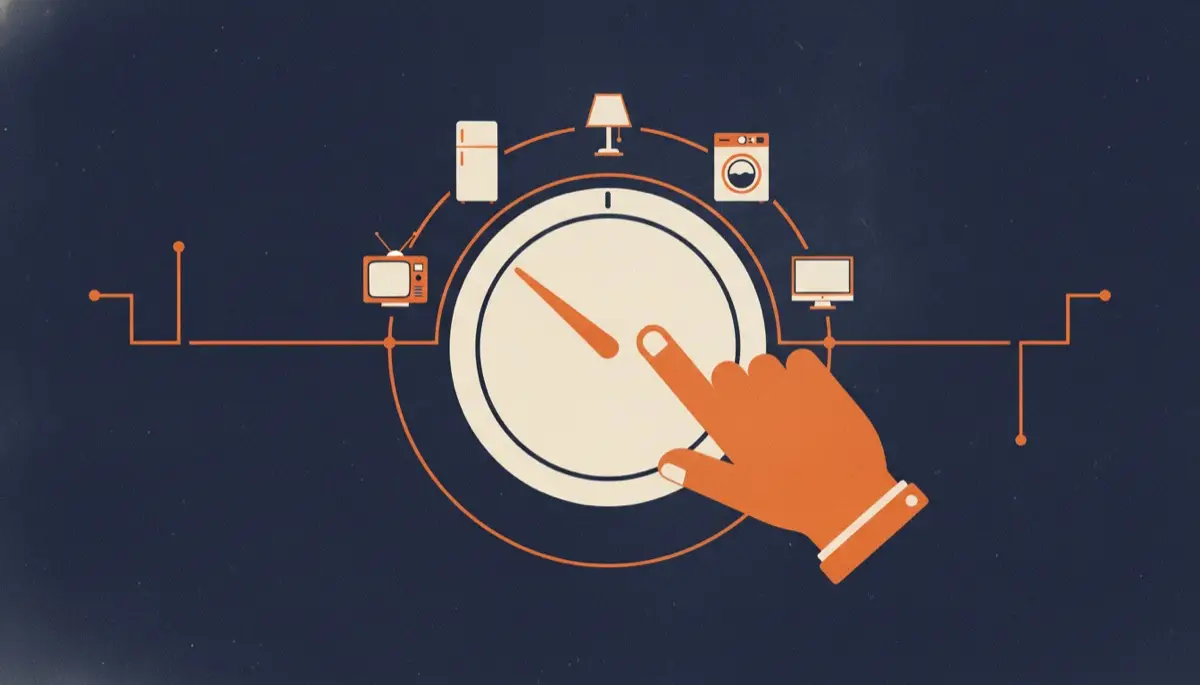
When people want to cut their electricity bill, they almost always look at the price per kWh. That makes sense, but there is a second lever that gets far less attention: contracted power. It is a fixed cost, charged every day of the year, and in many Spanish homes it has been oversized for years.
What contracted power actually is
It is the number of kilowatts you can draw at the same time. With 4.6 kW you can run, say, the oven and the washing machine with the lights on; with 3.45 kW you might have to choose. Exceed your power and the control switch trips, and you have to reset it.
On the 2.0TD tariff you can contract two different power levels: one for peak and standard hours, and another, usually cheaper, for off-peak hours.
Why it tends to be oversized
- Many homes still carry the power contracted when the property was built, sized for storage heaters or appliances that are long gone.
- After a renovation, or a switch to more efficient appliances, nobody remembers to lower it.
- When in doubt, people historically contracted extra "just in case". That just-in-case is billed every single day.
How to tell if you have too much
A simple clue: has your main switch tripped at any point in recent years? If the answer is no, not even that Christmas Day with the oven, the hob and the heating all running, you probably have room to go lower.
The proper confirmation comes from your real consumption data: the maximum-demand readings stored by your digital meter, which show the actual peak your home has needed.
What changing it involves
Raising or lowering power is a request to your supplier which the distribution company carries out. There is a small administrative fee and, as a general rule, you cannot change it more than once every twelve months, so it pays to get the number right before touching anything.
Our check
When we analyse your bill, we do not just look at the energy price: we also check whether your contracted power matches how you actually use electricity. Sometimes the saving is in a better tariff; sometimes it is in no longer paying for kilowatts you never use.